
Food Design Lab
The Food Design Lab explores issues related to the changing nature of food systems and imagines global experiences centered on sustainable food by responding to social and territorial challenges: health, new consumption patterns, production and distribution services, creation of spaces, products and services.

In 2012, L'École de design Nantes Atlantique chose to integrate food design into its programs in order to think about the food of tomorrow. This design-led research unit brings together experts to create concrete links between public and private partners on the major issues of a healthy and responsible diet. The connection to an international research ecosystem offers a perspective on food design practices.
The Food Design Lab creates innovative and prospective solutions that serve several types of design:
1/ Food Design: exploring food issues in a prospective and experimental way, from the point of view of all the actors of the food system; studying food habits and contextual changes due to the current and future food transition, finding and formalizing solutions,
2/ Systemic Design: identifying new collective opportunities and creating effective links between all the players in the sustainable agri-food system (production, processing, consumption, recycling, etc.),
3/ Prospective Design: the Food Design Lab takes an exploratory approach to imagining visions of food that drive change and seek to transcend conventional boundaries.
"
The Food Design Lab deals with the challenges of tomorrow's food in the broadest sense: food transition and uses.
"

The Food Design Lab's approach
Faced with societal and environmental challenges, our food system needs to be rethought in depth. Large agricultural areas, monoculture, intensive breeding and large-scale distribution are facing consumer defiance. More than ever, all the actors of the food system need prospective design to innovate and accompany this transition.
In this changing context, the Food Design Lab aims to:
- Rethink the food system using design. Our designers are involved in all stages of the food system: from production to consumption, through processing and distribution.
- Use design methods to drive this societal, health and environmental transition alongside all the players in the food system: local authorities, food industry stakeholders, equipment and household appliance brands, supermarkets and shops, producers or even consumers.
The Food Design Lab’s activities
The Food Design Lab is a platform for research, training and innovation around food practices that respect the living world. Find out more about the Reasearch - Training - Innovation approach.
The Food Design Lab’s research areas
Four essential topics guide the research work of the Food Design Lab:
- Gaining a better understanding and highlighting the specific characteristics of a territory through short circuits, transmission of know-how, local and global dynamics, culture and traditions
- Engaging in projects with a strong social and environmental responsibility. Examples of themes: "less is more", food waste, eco-innovations, co-products, protein transition, cutting out packaging
- Developing tools and projects to support food resilience, which has become a major concern. To achieve this, the Food Design Lab focuses on issues of trust and transparency (traceability), technological developments (Food Tech, Smart Agritech, etc.) but also on self-sufficiency movements.
- Taking into account issues of health and fragility by using design methods to imagine services and actions to raise awareness and educate people (nutrition, food insecurity and malnutrition, food autonomy and monotony, wellness etc.)
Discover the Food Design Lab conferences and publications
The methodology
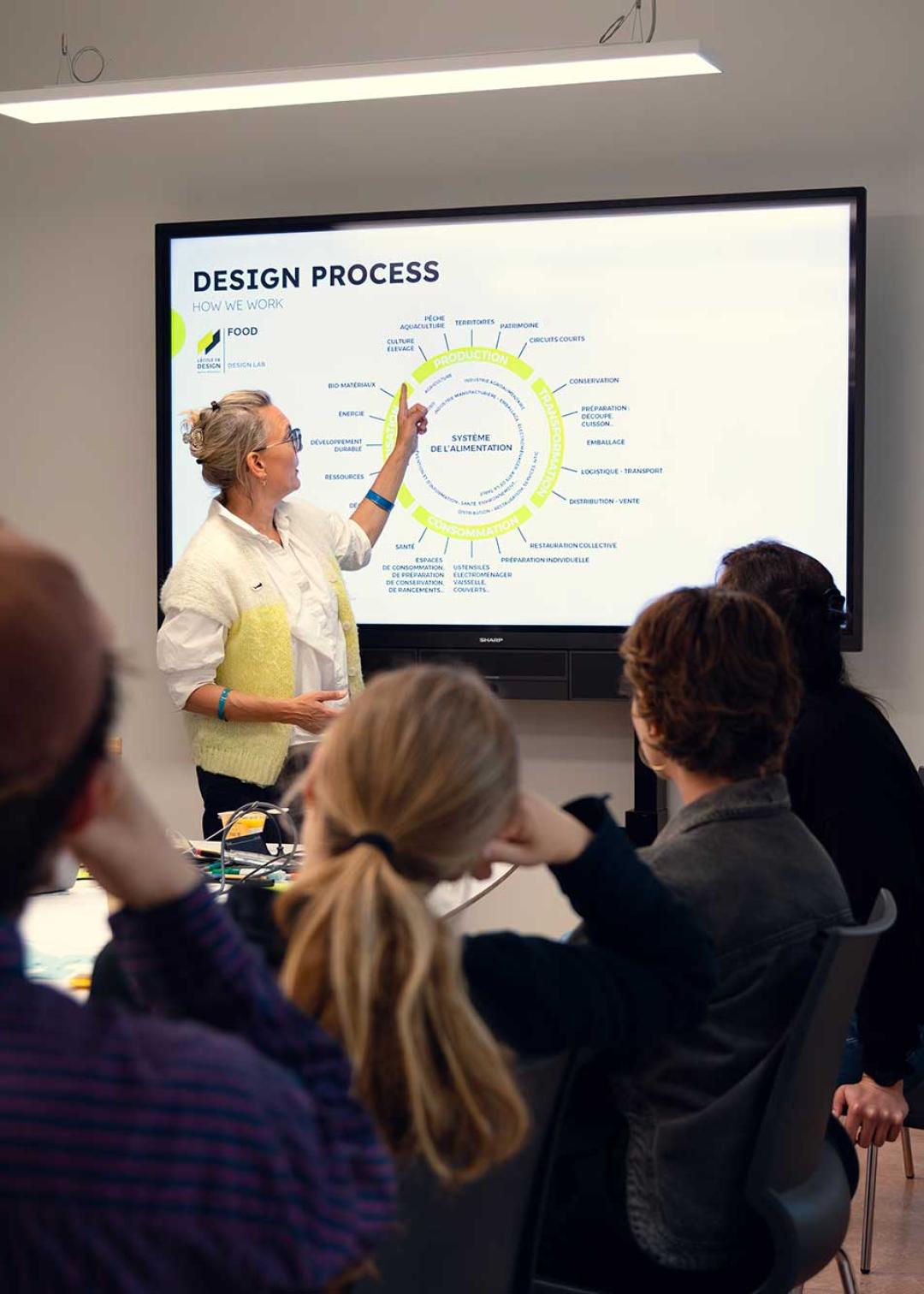
The methodology of the Food Design Lab is based on pragmatic design research, interdisciplinary teams and a project-based approach with a systemic vision.
It is based on the following main principles:
- Giving users a voice through a co-constructed workshop approach at the various stages of research;
- Providing students with hands-on experience through immersive visits to the company, community or institution;
- Encouraging "direct" experimentation by students: edible matter, exploration of sensoriality, creating new shapes and forms;
- Guiding student observation: lifestyles and global changes in eating habits through a usage-centered approach;
- Defining opportunities to act and develop products or services in design.
Our approach is that of holistic design, which is at the intersection between social values, technical aspects and economic dynamics. This approach leads to the emergence of products, services and spaces that integrate the user in their design and generate more responsible behaviors. The designer's approach and tools are dedicated to responsible innovation.
The Food Design Lab also encourages multidisciplinary teamwork. It brings together students in graphic design, interior architecture, product design and motion design. The Lab's expertise capitalizes on collaborative work with sociologists, institutions, researchers, historians and engineers.
Exhibitions and events
- The 2026 Researchers' White Night highlighted the “ComMEATted” project, which focuses on the acceptability of alternative proteins derived from plants, insects, and in vitro meat. This collaboration between our Food Design students and students from the IAE at the University of Nantes was carried out as part of a European project funded by the ANR (French National Research Agency).
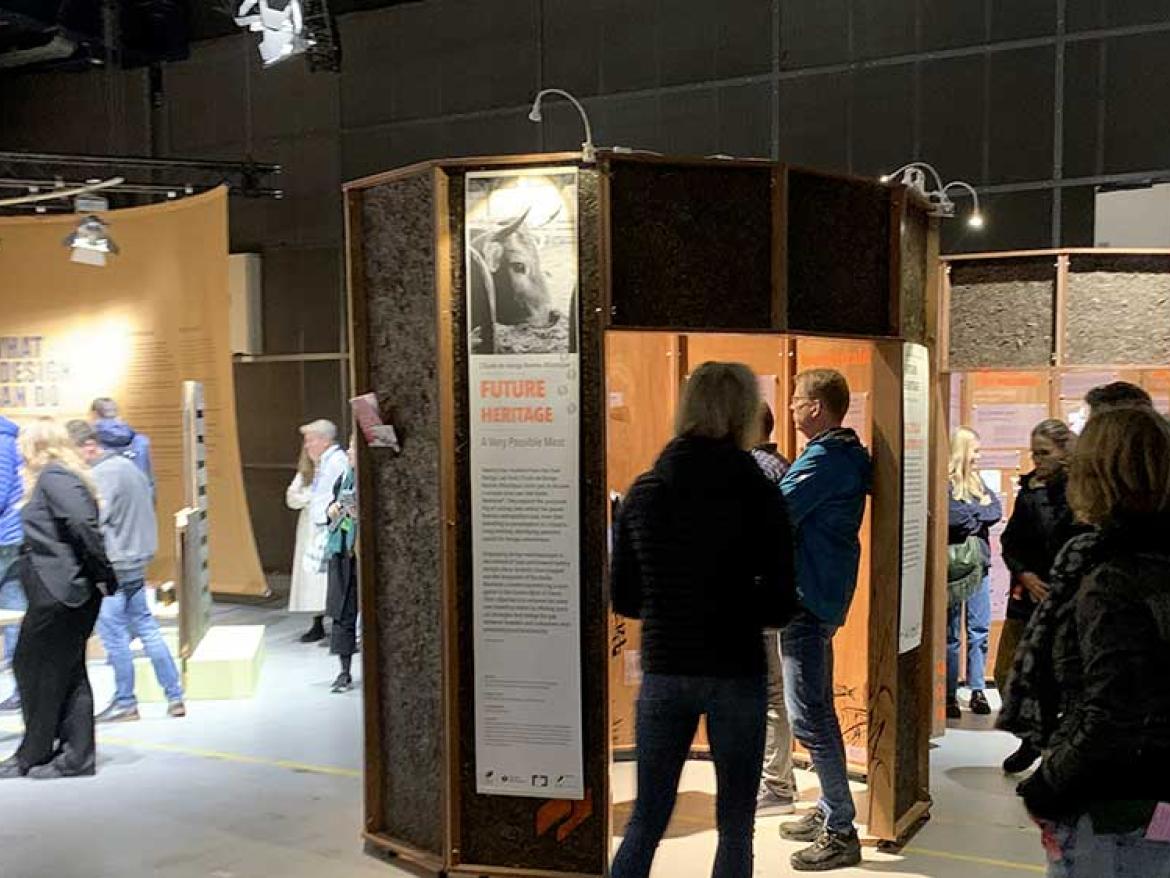
- During the VAN (Voyage à Nantes) in 2023, 22 students from the Food Design Lab were involved in the “Future Heritage—The Nantes Cow” project following the application submitted by Nantes Métropole as part of the Investments for the Future Program (France 2030). As part of a research seminar, they modeled an ecosystem and developed ideas for promoting a more sustainable food system through design and innovation. This project was also showcased at Dutch Design Week in Eindhoven, the Netherlands.
- Several projects were showcased at Dutch Design Week in 2022 and 2023 in Eindhoven.
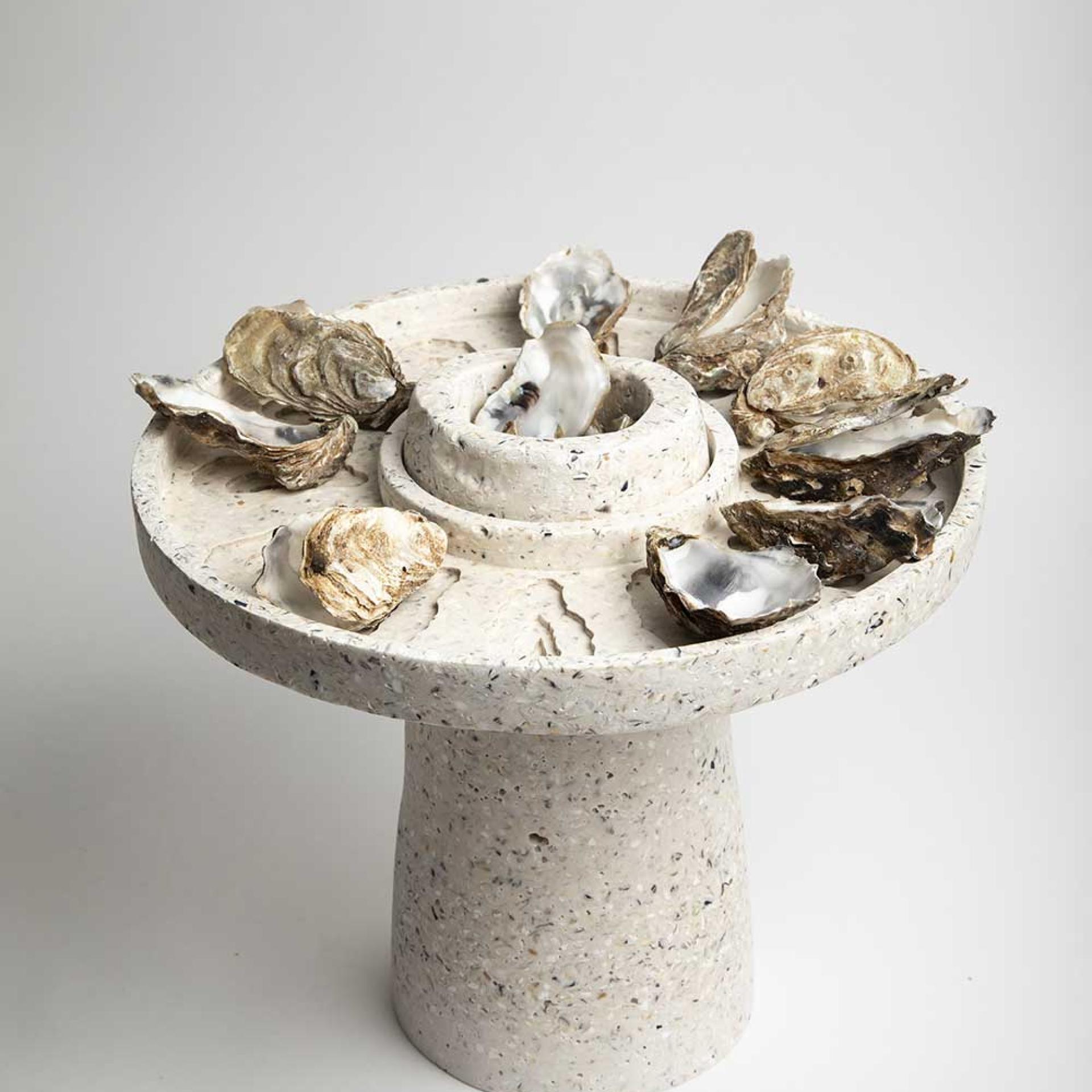
Students from the Food Design Lab devised alternatives to single-use plastic items using oyster shells. These projects were developed following an eco-innovation seminar organized by the Food Design Lab in collaboration with Malakio, a company co-founded by Morgan Guyader, a 2019 alumnus.
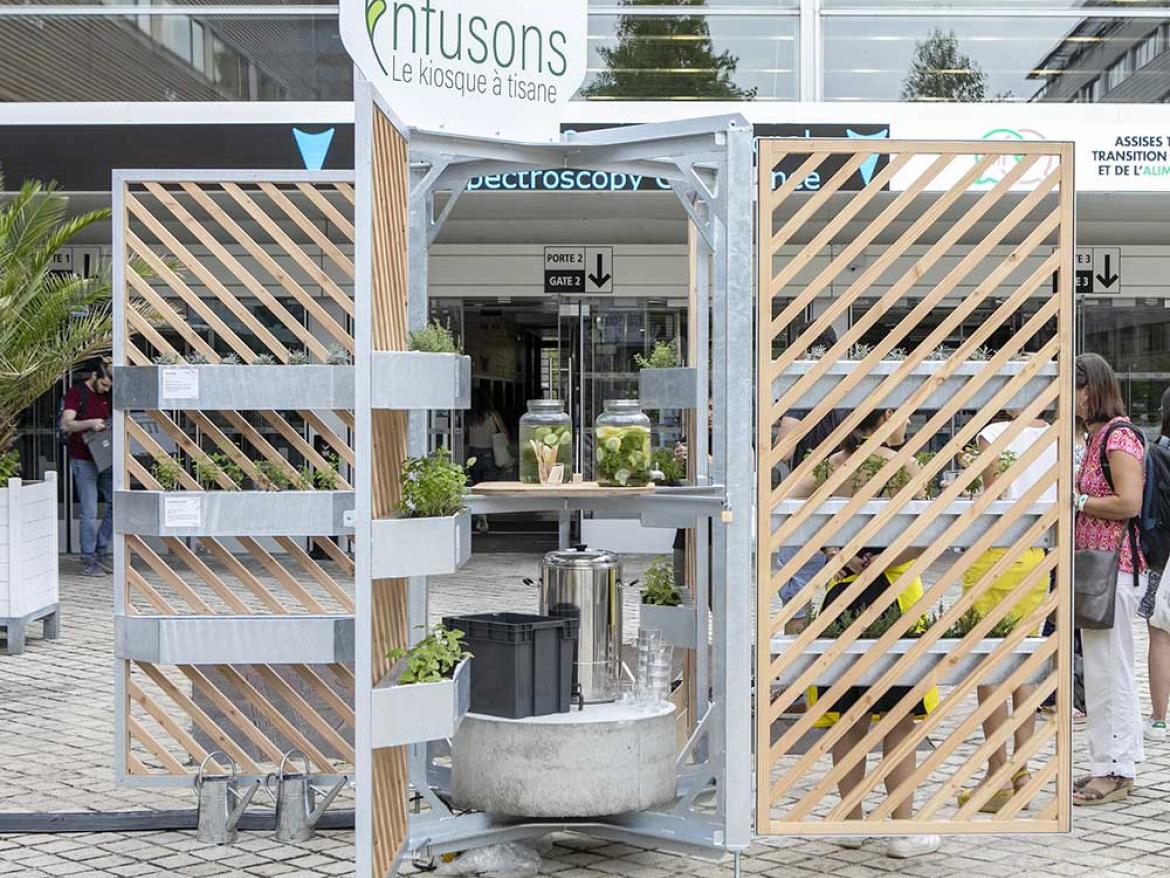
- The INFUSONS kiosk, designed by students from the Food Design Lab, offers a creative break for a moment of camaraderie and interaction over a refreshing herbal tea. This initiative, which has both social and educational dimensions, raises awareness about the benefits of aromatic plants and the scarcity of water. This project is the result of a collaboration between the Food Design Lab and Nantes Métropole. It was presented during the Assises Territoriales de l’agro-écologie et de l’alimentation durable 2022.
-
The “Markets of Tomorrow” project was developed by students from the Food Design Lab in partnership with the City Design Lab the school and Nantes Métropole to place Nantes’ markets at the heart of the neighborhoods of tomorrow and reposition them as vibrant, engaged, and sustainable community hubs.




Contest Prizes

France Design Impact Award
The Alguoir project was among the 40 nominees in the “Rising Star” category of the competition organized by APCI to recognize sustainable design projects! This project transforms the ruins of the Loctudy mill into a low-tech facility dedicated to drying seaweed.

Ecotrophelia
The Ecotrophelia contest aims to develop new eco-designed food products created by teams of students from higher education programs in science or business. Students from the Food Design Lab collaborated with engineering students from Oniris Nantes to envision the future of food and present their projects to a jury of industry professionals.
Several awards were won:
- Ecotrophelia Gold Medal in 2020 for the “CROC’S-MAGNON” project
- Prize for the “Et Hop” project
- “2022 Students’ Favorite” Award for the “TRIBUCHE” project with Oniris Nantes

The Fork Challenge Final
Trois projets issus du Food Design Lab ont été présentés lors du concours THE FORK CHALLENGE FINAL : FORK x DESIGN SCHOOLS, organisé par The Fork Organization, avec deux autres universités européennes, Elisava Facultat de Disseny i Enginyeria de Barcelona en Espagne et Escola Superior de Hotelaria e Turismo do Estoril au Portugal. Le projet "Then, From Sea to the Sea" a remporté le premier prix et a été présenté lors de la 2e Journée mondiale du design alimentaire et le projet "Coc, Seashell Cosmetic" a reçu le 2e prix.
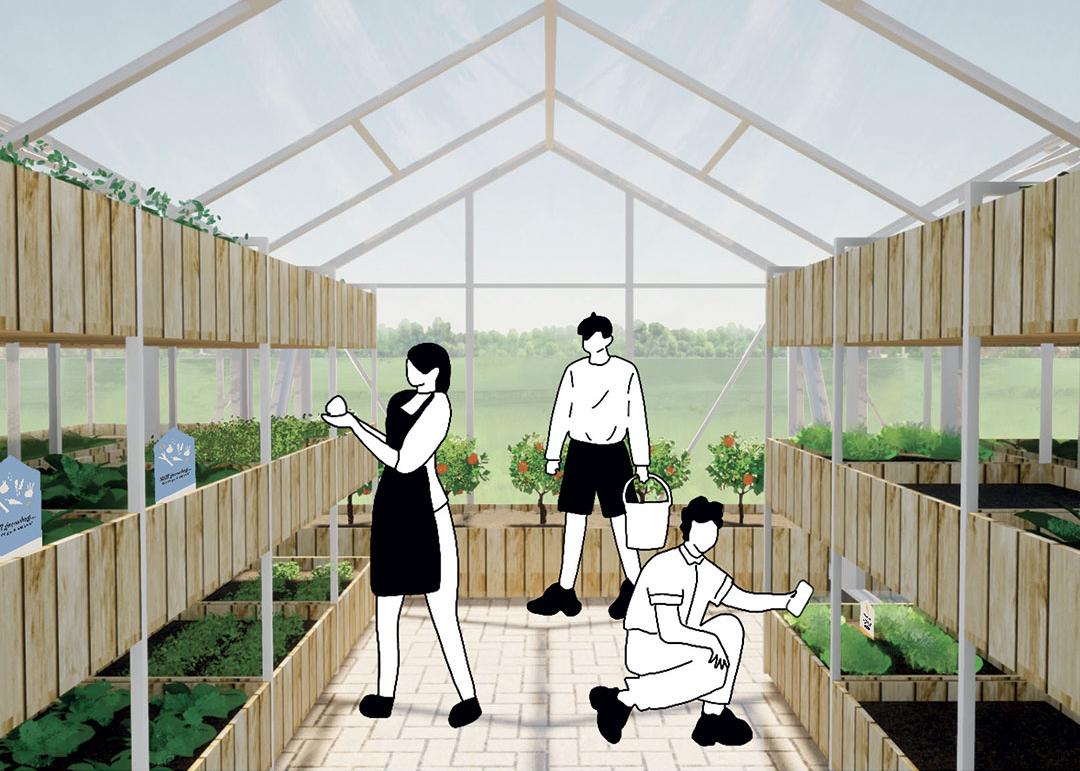
Yomfolks
Today, "junk food" causes more public health problems than the use of toxic substances such as tobacco or alcohol. Young people are particularly affected by this problem. Although many projects...
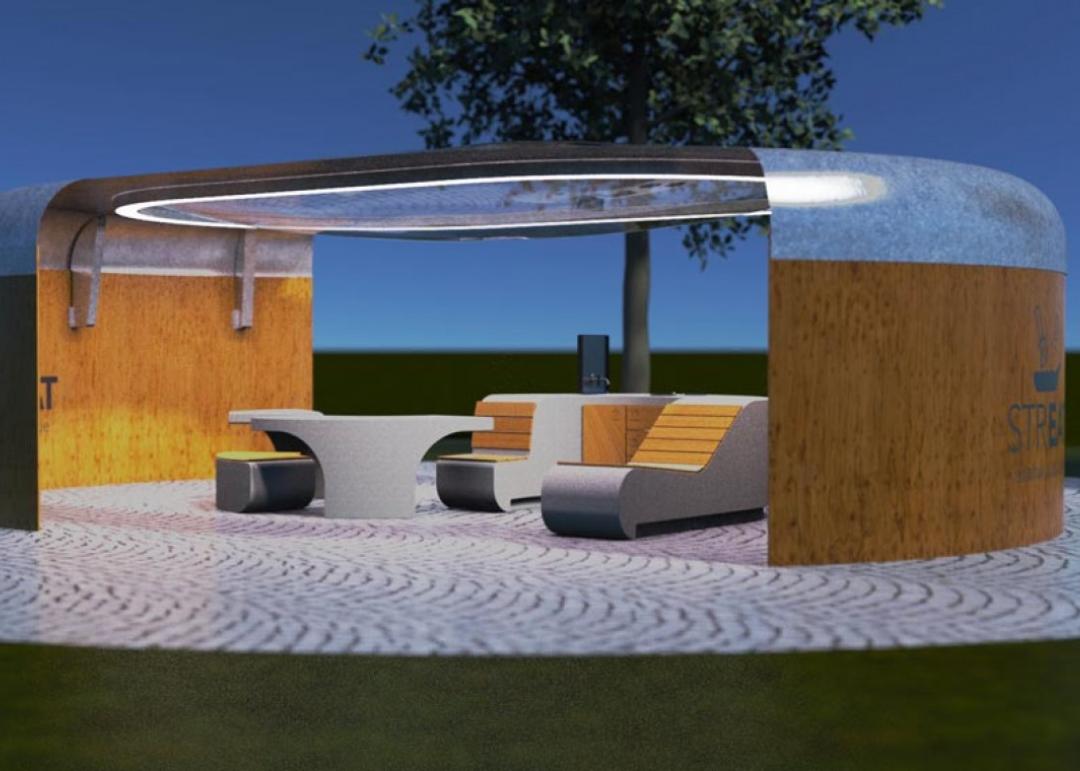
Streat
300,000 people. This is the number of homeless people in France according to the Fondation Abbé Pierre. The number is constantly increasing and malnutrition is a daily threat for this already fragile...
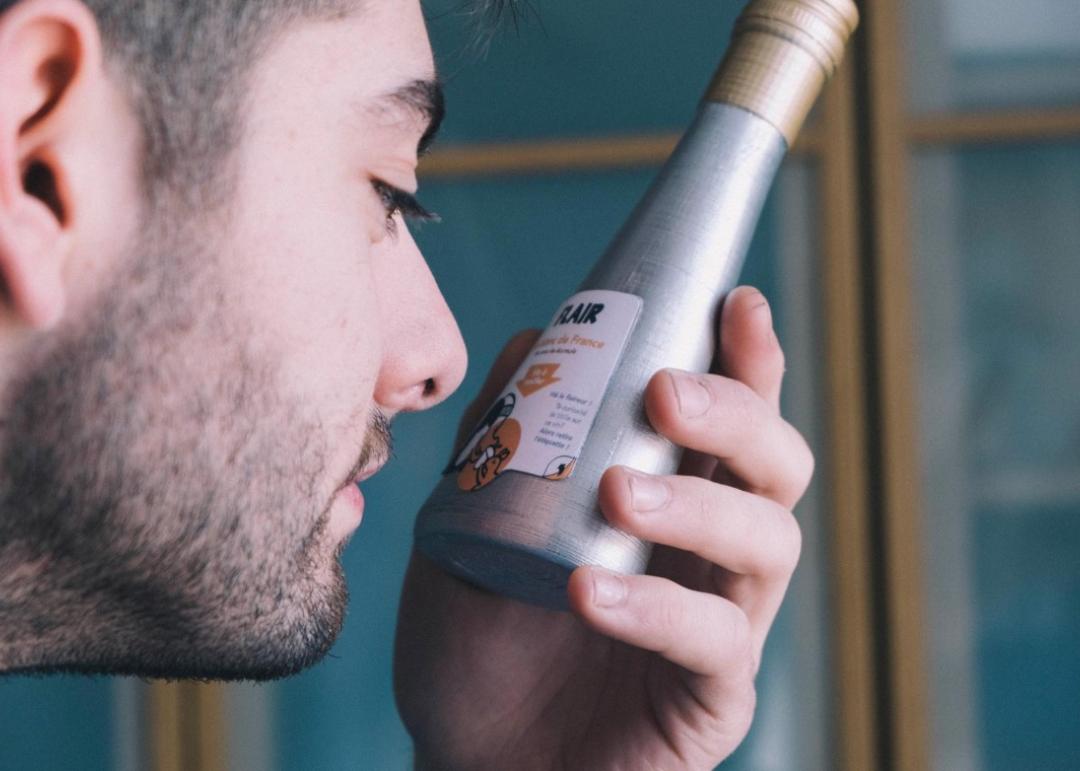
Flair
Does the rich winemaking tradition of our terroirs still inspire the younger generations? It would appear that 80% of them find the world of wine too complex. Discouraged by cryptic labels, they buy...
Become a partner of the Food Design Lab
Do you work for a company, association or local authority? Want to improve the quality of your content and their mediation?
The Food Design Lab offers you different types of collaborative projects:
- collaborative workshops;
- assessment missions;
- research contracts;
- hosting doctoral designers.
The services provided are eligible for the Research Tax Credit.
Tell us about your project and we will get back to you promptly: projet@lecolededesign.com
The partners
Academic


Companies


Institutions and NGOs


The Food Design Lab Team
Julia Kunkel
Food Design Lab's Director
j.kunkel@lecolededesign.com
A graduate of the University Of Fine Arts Berlin Julia Kunkel is a product designer specializing in Food, Global Brand Design and CMF with more than 17 years of experience in design agencies including Peugeot Design Lab and Carlin Creative.
Aude Messager
Food Design Lab's course leader
- Elise Auger - graphic design, plastic arts
- Lucie Bolzec - food design
- Simon Boussard - service, health and social design
- Juliette Brétéché - graphic design, food design research
- Laurence Deschamps - management
- Elise Fauveau - product design and packaging
- Pierre Foulonneau - industrial design
- Céline Gallen - PhD, marketing, food behaviour research
- Matthieu Gioani - strategic design, foresight, design fiction
- Élise Huneau - culinary design
- Sarah Joksimovic - English
- Clémentine Laurent-Polz - architect HMONP, project manager and specialist in accessibility and circular design
- Morgane Léonard - retail
- Marie Piet - food design
- Julie Scheffer - law
- Ionna Vautrin - product design
Some Alumni stories
- Marie Berthomé - Graphic & Food Designer at Brioche Pasquier (Marketing Innovation R&D)
- Danny Haffel - Packaging Designer at Team Créatif Group
- Morgane Bignon - Industrial Designer - Product Development & CSR Manager at Louis Tellier
-
Cathelle Dénoue - Freelance service and social innovation designer