The Impact of Artificial Intelligence on Design
Design and Artificial Intelligence
Artificial intelligence (AI) is profoundly transforming design practices and creative professions. L'École de design Nantes Atlantique has adopted a clear and responsible approach: to train designers who can understand AI, its potential, and its limitations, and integrate it into their work.
Design and AI: A Major Challenge for Future Designers
AI sparks as much curiosity as it does questions among those interested in pursuing careers in the creative fields.
L’École de design Nantes Atlantique is convinced that AI is not a threat to human creativity. It is a powerful tool for maximising its impact, provided you understand it fully, have mastered it, and use it with a critical eye.
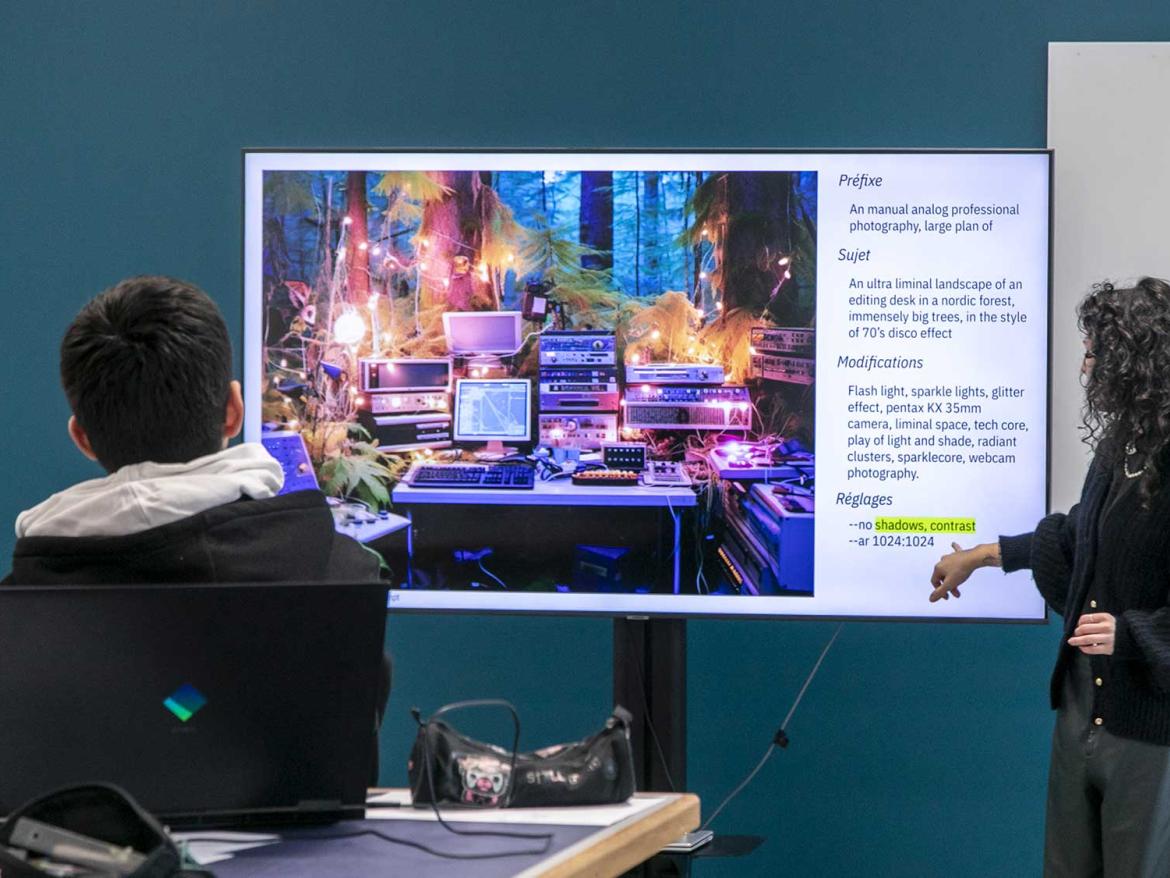
“AI is transforming creative practices, design methods, and innovation strategies. Rather than simply accepting it, we’ve chosen to teach it” explains Florent Michel, the school’s head of digital innovation and AI.
Understanding applications, giving meaning, and transforming complexity into useful experiences rooted in reality: that is the added value of a designer
"
AI is not there to replace designers’ creativity, but to amplify it. We want to train students to explore these tools in an ethical, critical and innovative way.
"

Generative AI (text, images, video, audio, etc.) does not replace designers’ creativity, but it does redefine how they work. It allows them to delegate certain tasks and explore new possibilities, without losing sight of the core of their mission: solving problems!
In the years to come, creativity will become increasingly hybrid, combining human intelligence with the power of algorithms.
In this interview, Mathilde Patoizeau, A 2019 graduate, artistic director and trainer in artificial intelligence, shares her view on the matter: “I think AI will enable many creative professionals to automate certain tasks and free up more time to focus on creation, iteration and exploration in general.”
"
Our role as designers has become even more important with the advent of these new technologies
"
Some examples of how AI is used in design:
- In user experience (UX): AI enables the real-time analysis of millions of behavioural patterns to improve interfaces and services, but it is up to the designer to translate this data into meaningful and engaging experiences.
- In visual design: AI makes it easier to explore a wide range of creative possibilities, but it is the designer’s vision, shaped by their experience and sensibility, that gives them meaning.
- Across all economic sectors (transport, healthcare, agriculture, industry, retail, services, etc.): AI optimises processes and automates certain tasks, but design continues to shape the interaction between humans and these technologies. Whether it involves designing intuitive interfaces for medical devices, creating AI-enhanced work environments, rethinking retail and the customer experience, or integrating AI into manufacturing and logistics...
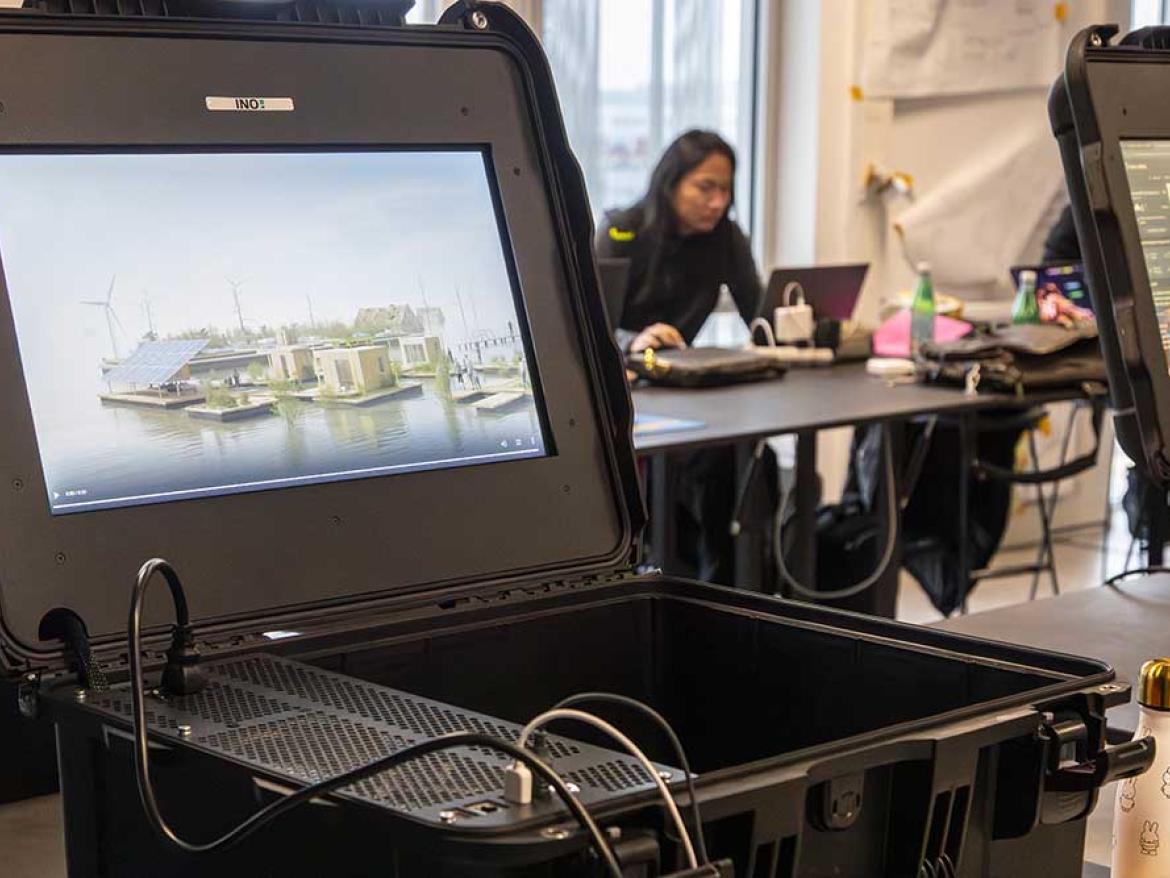
In this interview, discover two projects that won awards at the DBEW (Design Beyond East and West) during Milan Design Week 2026. This prestigious competition recognises students from around the world for their innovative solutions in the complex field of AI! Cutis Rana and Aquopia were honoured in Milan and will be showcased in Seoul, South Korea, in late 2026.
AI in design: benefits and limitations
When applied to design, AI opens up new possibilities whilst also imposing limitations that it is essential to understand and teach.
The role of AI in the creative process
- Acceleration of the research, ideation and prototyping phases
- Rapid exploration of creative ideas and usage scenarios
- Methodological support for structuring and documenting a project
- Decision support through the analysis of complex data
- Improvement of the user experience through adaptive and personalised interfaces
Limits
- Risks of algorithmic bias and standardisation of output: it is essential to combat these biases and promote a diversity of cultural references within AI systems.
- Issues relating to intellectual property and copyright: the challenge is to ensure a degree of transparency regarding the tools used and the traceability of the data involved
- Over-reliance on tools at the expense of critical thinking
- The environmental impact of AI technologies
At L'École de design Nantes Atlantique, students learn to analyse tools, question their uses and take full responsibility for the design choices they make.

"
Generative AI acts as an assistant not only to the teacher but also to each student, enabling them to question the tools, methods and approach used in carrying out a project.
"
AI at the heart of design studies
For over thirty years, the school’s teaching approach has been based on learning by doing. This hands-on, project-based approach enables pupils to acquire skills through experience. The school is therefore now integrating AI into its teaching in a practical and thoughtful way, placing it at the heart of the creative process.
“Generative AI acts as an assistant not only to the teacher but also to each student, enabling them to question the tools, methods and approach used in carrying out a project.” explains Florent Michel, Head of AI at the school. « Our students are encouraged to adopt a co-creative approach to using AI as a tool for production and support. For example, they can use it to create personas and interact with them via chatbots. »
The three main uses of AI at L’École de design Nantes Atlantique
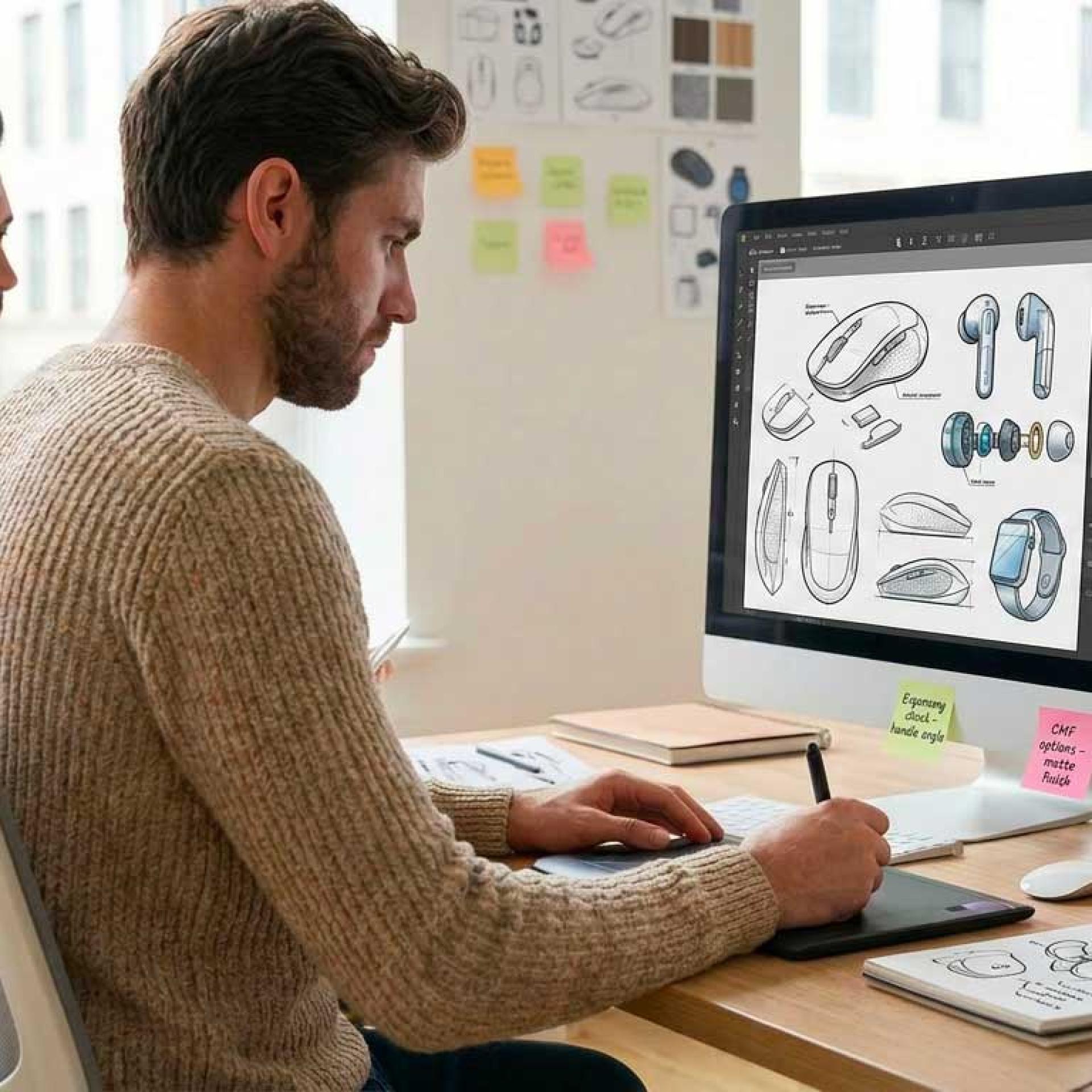
- AI as a creative tool, integrated into the project process to support methodology, research and the development of ideas.
- AI as an educational tool, to explore how we learn and teach design in the age of smart technologies.
- AI as an integral part of the products and services we design, enabling us to develop new features and enhanced experiences
A responsible, creative and forward-looking approach to education
The school incorporates AI-focused modules into all of its programs, ranging from data collection and analysis to generative AI applied to design.
AI training is being rolled out gradually across the various programs: after an initial phase of familiarization and critical understanding of the issues involved, students can experiment with it creatively. AI is then integrated into design practices and placed at the heart of the creative process. By the end of the program, students apply AI in a more strategic context, beyond the design project itself, to explore business, entrepreneurial, or communication challenges, for example.
Three core skill sets are thus developed throughout the course of their design studies:
- Technical skills for understanding and using AI Tools
- Methodological skills for integrating AI into a structured creative process
- Critical and ethical skills to examine data usage, data transparency, and intellectual property
"
We are committed to a human-centered design approach enhanced by AI. Our students will learn to harness the power of these technologies while maintaining their creativity and social responsibility.
"

The school anticipates the skills of tomorrow and stays grounded in reality through collaborations with the professional world.
In 2025, for example, international master’s students worked on a project combining design fiction and artificial intelligence to envision the future of healthcare in 2040, in partnership with Nantes University Hospital and the advertising agency Héral.
At the end of the year, the school also signed a strategic parnership with HONOR, an iconic technology brand known for its innovations in product design, artificial intelligence, and connectivity.
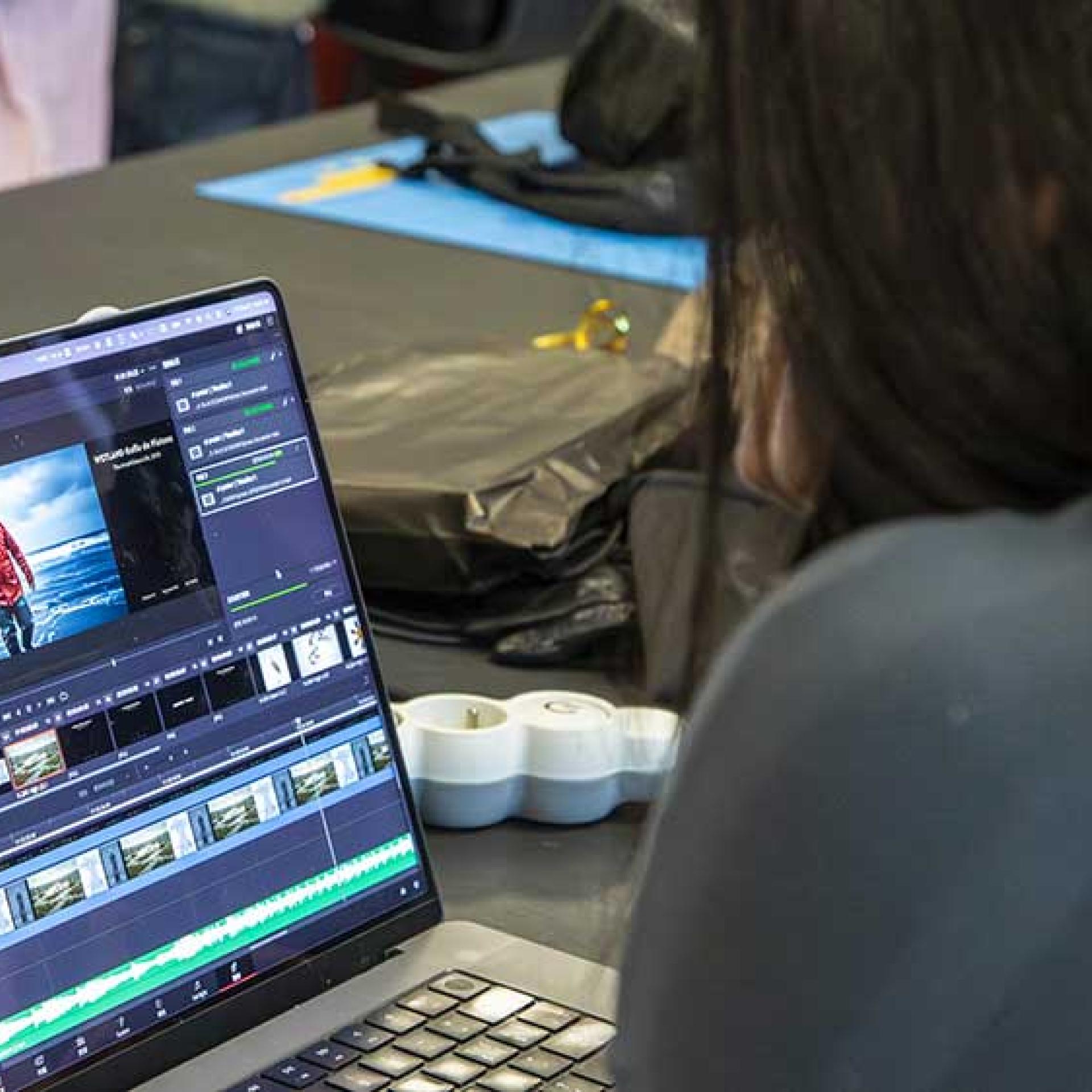
In 2026, the school entered into a partnership with The Next Stories, a Nantes-based startup specializing in generative artificial intelligence. This collaboration gives students access to the company’s AI-powered video content creation platform, allowing them to experiment with these tools and work on real-world use cases in a professional setting.
A hackathon held at the Capgemini/frog offices helped address the challenges faced by La Poste Group. In particular, participants were able to incorporate AI to envision plausible futures.
A committee of AI and design experts, composed of recognized professionals, provides guidance on the school’s strategic direction.
All the school's Design Labs, true hubs of innovation and research, testing practical applications of AI in design.
L’École de design Nantes Atlantique also trains its faculty on the challenges posed by AI to better support students in their learning and critical thinking about these technologies. It is developing intelligent educational support tools in collaboration with the digital workshop teams.
Events like 'AI Coffees' promote the sharing of best practices and foster a shared culture among teachers, students, and professionals. AI Bootcamps also provide opportunities to experiment with tools for working with images, video, text, and prototyping.



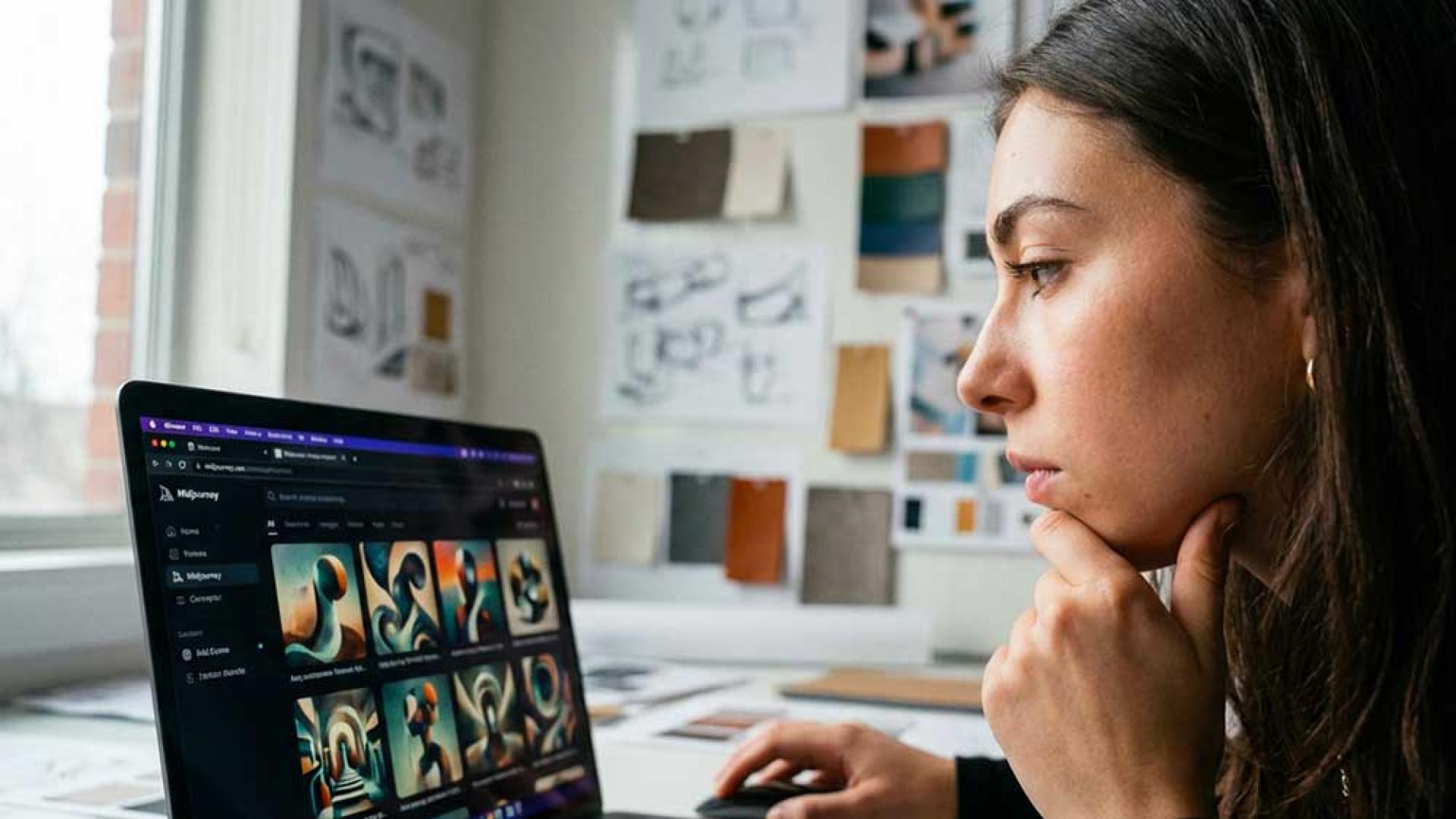



To better understand the impact of AI on creative and design professions, watch the replay of the webinar hosted by Florent Michel in April 2026.