Design in Context
International
Summer Camp
Duration: 7 days
Fee: €3,500
L’École de design Nantes Atlantique (quartier de la création)
Experience Design at L’École de design Nantes Atlantique
Design in Context is a one-week design summer camp for international students who want to discover professional design methods and work on real-world challenges.
Why Join Our Summer Camp?
This Summer Camp is not a traditional workshop.
Designed as an immersive, project-based experience, the program helps students develop design skills, intercultural collaboration, and professional readiness, while discovering Nantes, the Loire region, and French design culture.
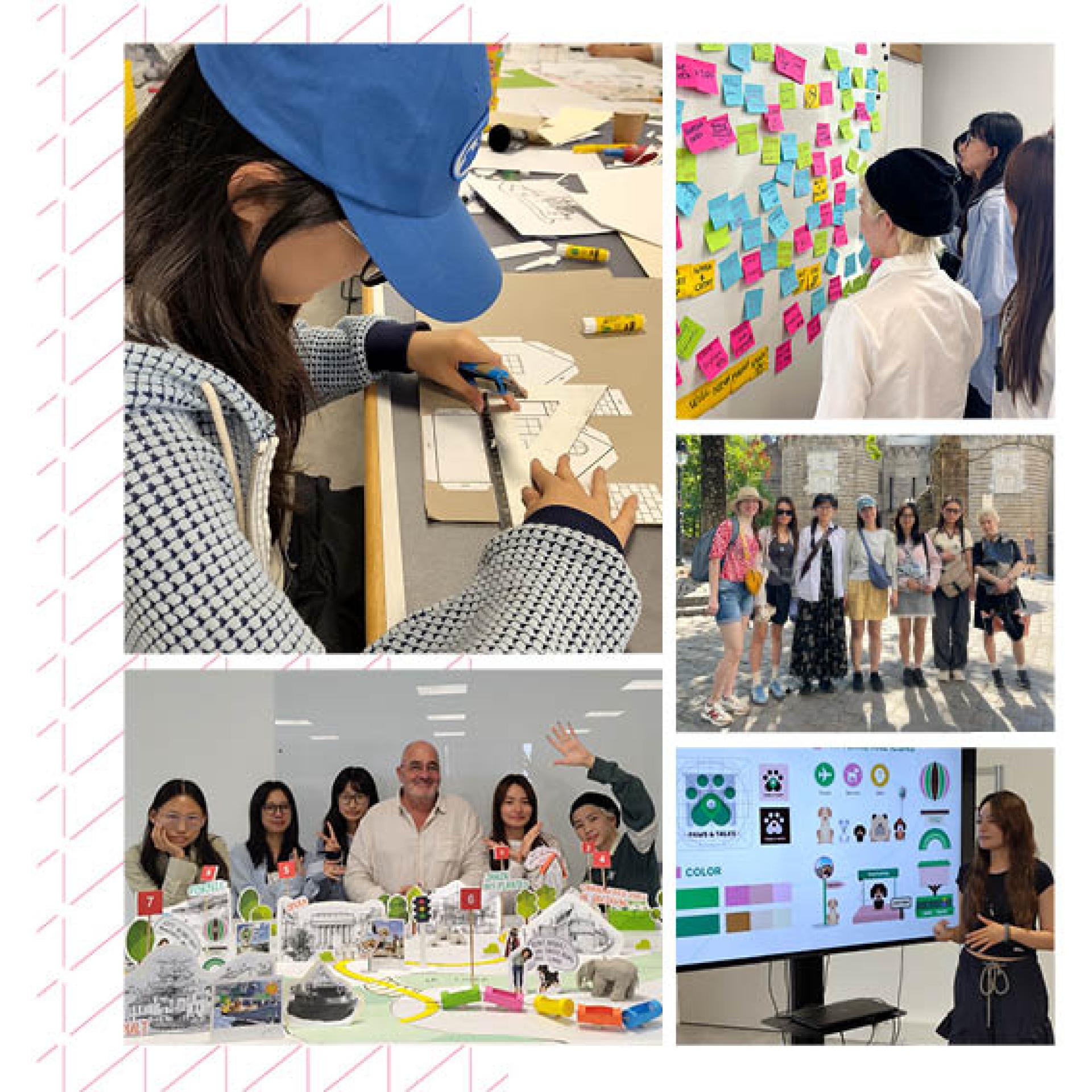
Throughout the week, students progress through structured phases of field observation, ideation, and concept development. They transform insights gained from the local environment and interactions with users into concrete design proposals.
Teachers, experts, and students collaborate in a dynamic, hands-on environment, focused on creative problem-solving, design thinking, and professional design practice.
An Immersive Learning Environment: Nantes & the Loire
Nantes is a creative city, recognized for its cultural dynamism, its design ecosystem, and its quality of life. Located along the Loire River and close to the Atlantic Ocean, it is also at the heart of a region with a strong industrial heritage, shaped by major sectors of excellence such as aerospace, shipbuilding, agri-food industries, and mobility.
Working closely with leading companies in these sectors, the school builds on this economic fabric to offer a rich field of exploration for design: mobility, food culture, public space, sustainability, and everyday uses.
Here, the territory becomes a true material for design.
What You Will Learn
-
Observe a territory and identify relevant design challenges
-
Work with real users and stakeholders
-
Develop a design strategy grounded in context
-
Transform insights into concepts and project narratives
-
Present and pitch a design project professionally
Teaching Approach
The program follows the professional design process used at L’École de design Nantes Atlantique:
- Understanding & Strategy: field observation, user interactions, problem definition
- Ideation: concept generation and selection
- Development & Storytelling: experience design, narrative building, and pitch
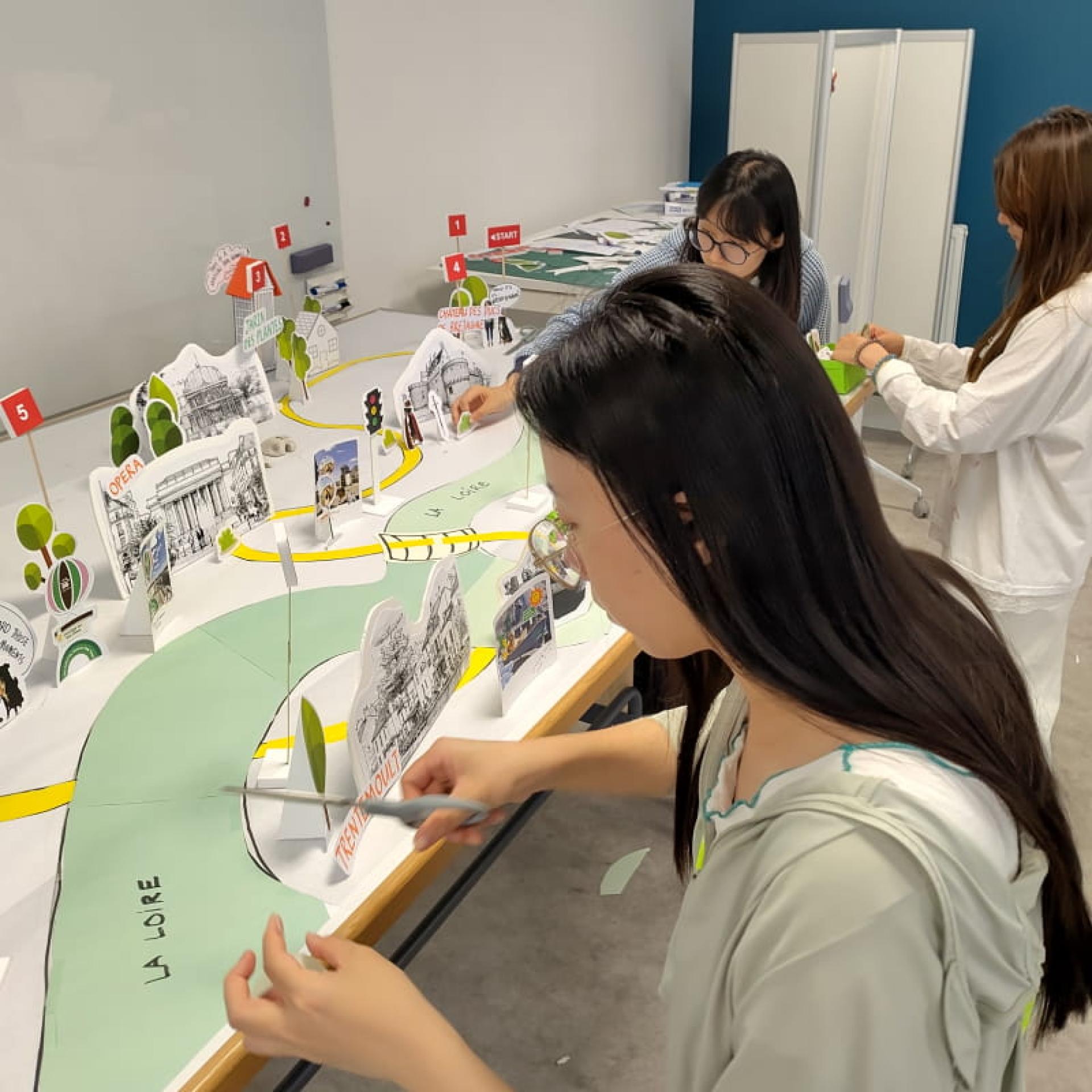
Students work in multicultural teams, alternating between fieldwork and studio workshops within the school.
Professional Immersion
Participants meet:
- Local partners and institutions
- Design studios and industry professionals
- Real users related to the chosen project theme
Projects are presented to partners at the end of the program, offering a real professional experience and feedback on the work produced.
Practical Information
Participation Fee
Fee: €3,500 net per participant, including:
-
Accommodation (breakfast included)
-
Design workshops and educational supervision
-
Field visits and meetings with partners
-
Lunches on workshop days
-
Welcome lunch and final lunch with partners
-
Course materials
-
Certificate of participation
Not included:
- Transportation
- Personal expenses
Who Is This Program For?
-
Design students from partner universities
-
European and international design students
-
Advanced undergraduate (Bachelor) or Master’s level students
Learner Journey
The Program Combines:
-
Territory exploration
-
Intercultural collaboration
-
Professional design methodologies
-
Direct contact with partners and users
Before arrival, an online welcome session is organized in order to prepare students for the Summer Camp.
This session aims to create an initial connection between participants, present the school’s methodology, and share early resources about the selected theme, the partners they will meet, and the overall schedule.
Goals of the online briefing:
- Create an initial group dynamic and sense of belonging
- Introduce tools, mindset and expectations
- Share thematic and territorial context
- Encourage autonomous preparation before arrival
The Summer Camp is structured around three main design phases, alternating between fieldwork and in-school collective design sessions:
- Phase 1 – Understanding and Strategy: territorial observation, user encounters, and reframing of problem statements through strategic tools.
- Phase 2 – Ideation: concept generation, selection and first formalization of proposals.
- Phase 3 – Concept Development and Narrative: experience design, storytelling, visual production and pitching.
Depending on the theme and partners, students may use tools such as: Value Chain Analysis, Business Model Canvas, Circular Design principles, user journey mapping, service blueprints, and narrative scenario building.
Day-by-Day Program
12:00–14:00 – Welcome lunch and intercultural icebreakers
14:00–16:00 – Program introduction
- Recap of the online briefing
- Objectives, expectations and design methodology
- Overview of the schedule and working rhythm
- Introduction to partners and thematic context
Optional: informal campus tour, logistics and open Q&A; session
Full day outside the school
An immersive and sensitive exploration of the territory, adapted to the selected theme
Objectives:
- Acculturation to the local context and lifestyles
- Discovery of potential study fields and design playgrounds
- Sensory and cultural experiences (walking, eating, visiting, observing)
- Informal exchanges and group bonding
Documentation encouraged through: photos, videos, sketches, short texts and sound recordings.
This day is intentionally open and exploratory, without formal academic exercises.
10:00–12:00 – Partner or studio visits (two half-groups rotating)
12:00–14:00 – Lunch with partners at the school or on site
14:00–15:30 – Roundtable discussion with partners
- Territorial challenges and professional contexts
- Questions and exchanges with students
15:30–17:00 – First feedback and framing session (pre-phase 0)
- Key impressions and observations
- Identification of emerging issues and questions
Full day outside the school depending on the selected theme.
Activities may include:
- Targeted territorial observation and documentation
- User encounters and informal interviews
- Mapping of contexts and ecosystems
- Lunch provided by the school if necessary.
Afternoon – Strategy workshop:
- Stress test game
- Reformulation of problem statements
- First strategic directions for each group
10:00–12:30 – Ideation tools and exercises
- User definition
- Context analysis
- Needs and insights formulation
12:30–14:00 – Lunch break
14:00–17:00 – Concept generation and selection
- Divergence and convergence exercises
- Selection of one final concept per group
Optional relaxed exploration or cultural activity.
Possible objectives:
- Continued observation of the territory
- Cultural visits or sensory walks
- Informal documentation for inspiration
This day remains flexible depending on energy levels and logistical opportunities.
Students continue exploring the territory independently.
- Suggested activities:
- Sketching and visual notes
- Photo and video documentation
- Audio recordings
- Informal interviews and observations
Collected material will feed Phase 3 development.
10:00–12:30 – Concept refinement
Value proposition
Experience and service flow
12:30–14:00 – Lunch break
14:00–17:00 – Storytelling and scenario development
- User journey construction
- Narrative structure
- Preparation of visual and presentation needs
9:30–12:00 – Final production and pitch preparation
- Visual materials and boards
- Pitch structure and rehearsal
Optional: printing if required
12:00–14:00 – Lunch with partners (provided by the school)
14:00–15:00 – Pitch setup and final adjustments
15:00–17:00 – Final presentations
- Group pitches to partners
- Questions and feedback
- Possible filming and communication content
About The School
About L'École de design Nantes Atlantique
A leading institution in higher education, L'École de design Nantes Atlantique, a partner of the Nantes St-Nazaire Chamber of Commerce and Industry, was founded in 1988. It trains professionals in creativity and innovation through both initial education and continuing education. A pioneer in addressing evolving technological, societal, and environmental contexts, the school positions design as a strategic discipline serving a responsible world.
L'École de design Nantes Atlantique is a private non-profit association (French law 1901). Recognized by the French State, it is a member of the Conférence des Grandes Écoles and affiliated with Nantes Université. Its mission is recognized as being of public interest by the Ministry of Higher Education and Research. As such, it is one of the few design schools in France to hold the EESPIG label (Private Higher Education Institution of Public Interest). In 2006, the school launched the first apprenticeship training center (CFA) dedicated to design and innovation in France.
In France, École de design Nantes Atlantique has campuses in Nantes and Laval. Internationally, the school is present in Shanghai (China), São Paulo (Brazil), Montréal (Canada), and Cotonou (Benin) with Africa Design School and Africa Studio. In partnership with the prestigious China Academy of Arts, it created in 2022 the first Sino-French design institute (NACAA) in Hangzhou.
Every year, L'École de design Nantes Atlantique educates 2,570 students (1,770 in France, 400 in China, 300 in Benin), including 300 apprentices, and additionally trains 400 continuing education learners. The school has a network of 1,000 partner companies and 4,300 alumni.
Registration
Registration for the Summer Camp is done through your university.
We encourage you to contact your institution’s international office to learn about the registration process and to enroll.
Contact
For any questions, you can also reach out to the Continuing Education team at École de design Nantes Atlantique:
- formation-continue@lecolededesign.com
- +33 (0)2 51 13 50 70
Duration: 7 days
Fee: €3,500
L’École de design Nantes Atlantique (quartier de la création)